American Heritage & Founders' Writings
Judicial Indifference Started in 1803 As Activism In Statutory Interpretation Of Fundamental Law
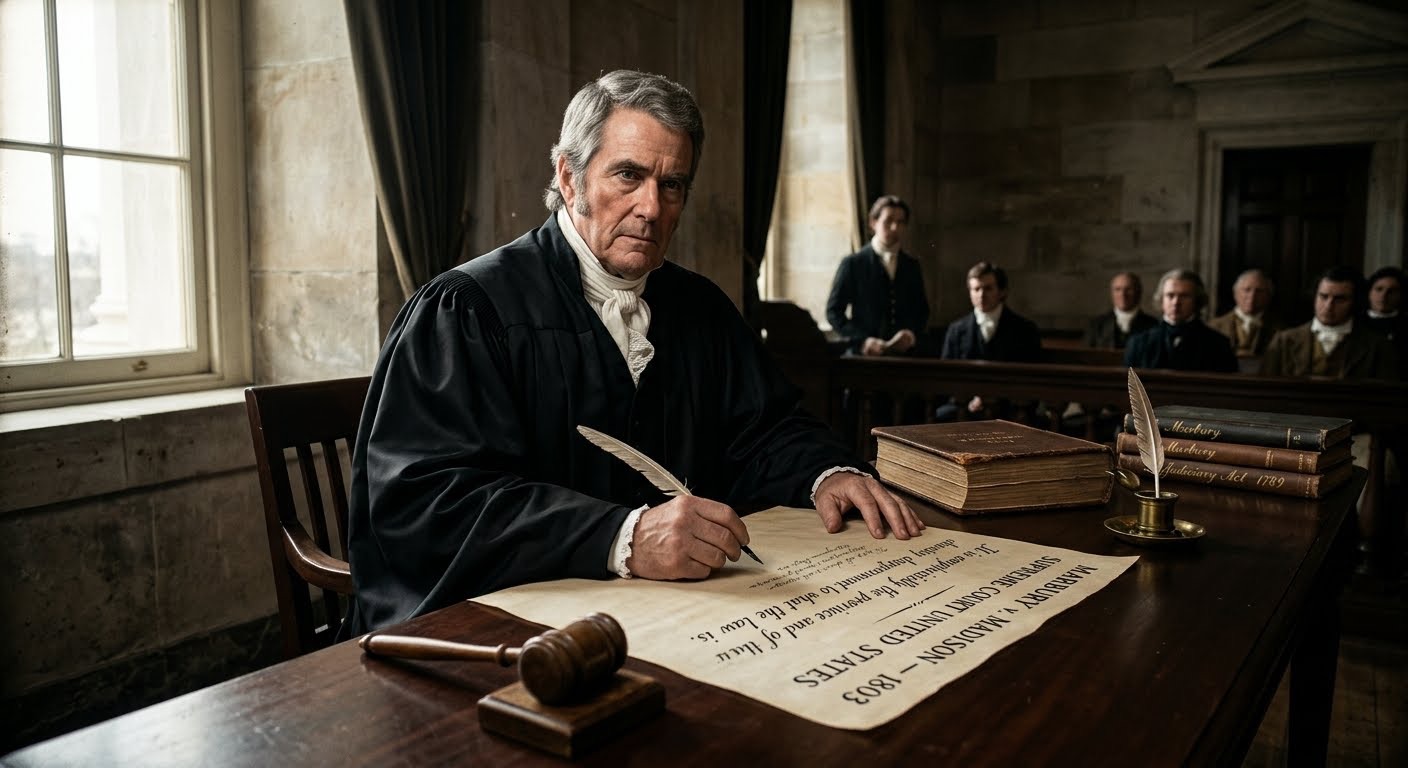
Abraham Lincoln famously exposed the slavery faction’s master strategy: selling moral indifference. By influencing the press, capturing federal offices, and promoting the pseudo-judicial doctrine of "popular sovereignty," pro-slavery forces conditioned Americans to treat human bondage as a neutral policy choice rather than a violation of fundamental rights. Yet that legal accommodation traced its roots back to 1803, when Chief Justice John Marshall’s Supreme Court established judicial review in Marbury v. Madison. While claiming the Court’s duty to say what the law is, Marshall’s broader jurisprudence—and his own status as a slaveholder—helped entrench a style of statutory interpretation that subordinated natural rights to property claims and procedural convenience. By treating human beings as commercial chattel under positive law, early federal courts normalized judicial indifference toward slavery. That precedent matured into Chief Justice Roger Taney’s 1857 Dred Scott ruling, which weaponized judicial supremacy to strip Black Americans of citizenship and nullify congressional limits on slavery’s expansion. Coupled with pro-slavery militias terrorizing Kansas settlers, this legal gaslighting hollowed out the Declaration of Independence and pushed the fractured republic into a catastrophic Civil War. Lincoln recognized the trap and worked alongside Frederick Douglass to dismantle it. Douglass shattered the illusion of neutrality from the public square, while Lincoln used executive power and constitutional reform to reclaim the nation’s founding principles. Still, the Supreme Court’s habit of narrow statutory evasion returned after Reconstruction, blessing Jim Crow segregation for generations. Lasting liberty requires rejecting judicial indifference and anchoring law firmly in human dignity.
Send this to someone
A civic square for verified Americans, open to the nations of the world, its leaders & ambassadors. Reading is open to everybody. Posting, replying and voting are for members.