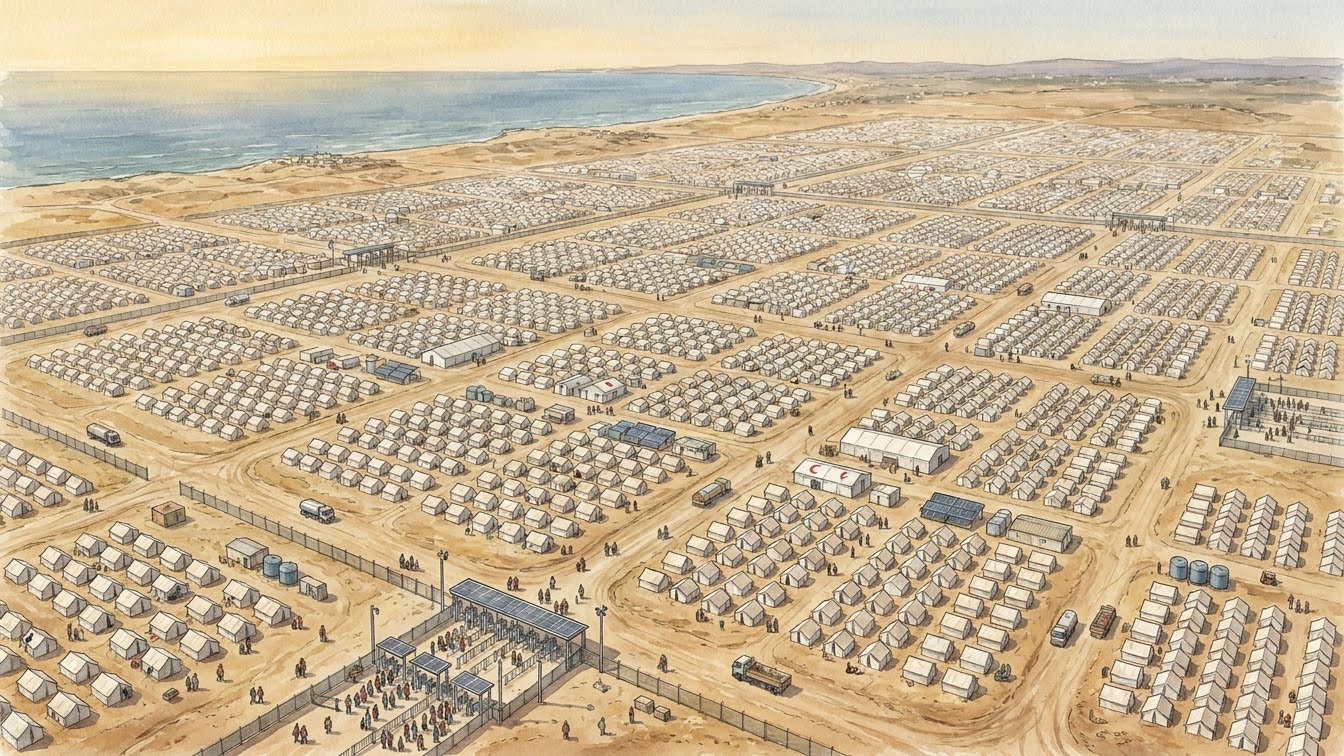
In the desolate expanses of southern Gaza, where the rubble of Rafah has been systematically cleared and compacted by heavy machinery, a new blueprint for humanitarian governance is taking shape. While verified on-the-ground photography of these proposed facilities remains elusive, leaked military planning documents, investigative reporting, and commercial satellite analyses offer a stark preview of what lies ahead. Rather than traditional relief shelters, the emerging vision—epitomized by the proposed “Emirati compound” and U.S.-Israeli stabilization plans—pairs basic survival with pervasive digital surveillance. According to leaked blueprints from the U.S.-led Civil-Military Coordination Center and reporting by outlets like The Guardian and Drop Site News, these fenced residential zones are designed to house tens of thousands of displaced Palestinians under strict security protocols. Access to running water, healthcare, education, and shelter is contingent upon residents submitting to biometric registration, facial-recognition checkpoints, and continuous vetting coordinated with Israeli military authorities. Even economic life within these zones is envisioned through monitored digital wallets, turning everyday transactions into traceable data points. Proponents frame these “alternative safe communities” as pragmatic, secure hubs necessary to deliver aid and prevent militant infiltration amid ongoing regional instability. Yet human rights monitors and forensic researchers warn that conditioning basic humanitarian assistance on biometric compliance transforms relief into an instrument of population control. Satellite imagery analyzed by groups like Forensic Architecture shows the physical footprint of this model already being etched into the earth: vast grids scraped clean of past civilian life, readied for modular containment. As hundreds of thousands of families face another harsh winter in deteriorating, flood-prone tents across the territory, the allure of stable infrastructure is undeniable. However, the international community must scrutinize the precedent being set in Rafah. Humanitarian aid is meant to preserve human dignity, not trade it for algorithmic oversight. When shelter requires surrendering one’s biometric identity to an occupying power, the line between a sanctuary and a digital detention zone disappears entirely today.
Read the discussion More in Global News
More in Global News
Send this to someone
A civic square for verified Americans, open to the nations of the world, its leaders & ambassadors. Reading is open to everybody. Posting, replying and voting are for members.
