Preserving The Spirit Of The Declaration of Independence
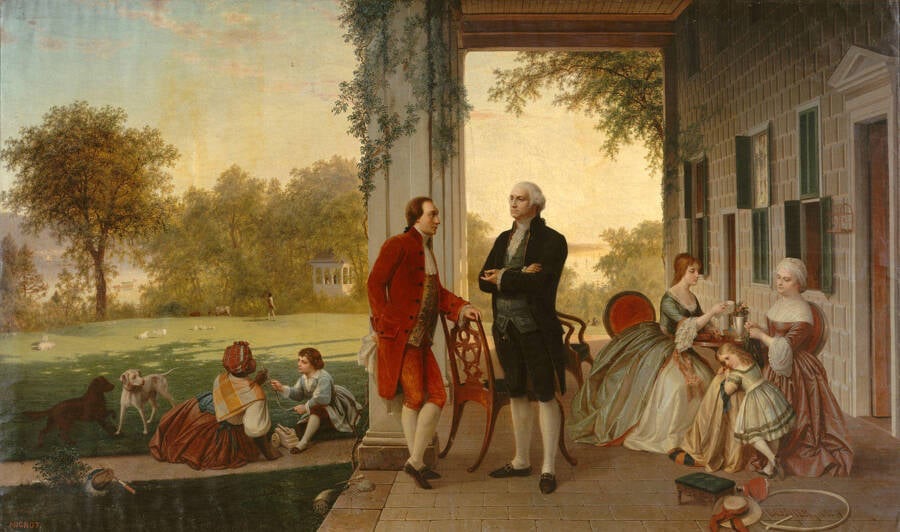
The Marquis de Lafayette, an idealist enthralled by the happenings of the Declaration of Independence & the Continental Congress that created it, with its human rights focus was so enthused that he informally left his country, monarchical France, along with his status within the king and queen's circle, paid for a ship and sailor-soldiers, and went to present himself to the Continental Congress as a willing soldier. In time, he became as a son to George Washington; ranked and given a command of soldiers to defend the new nation. Later, in his writings to George Washington, as published in The Writings of George Washington, available through the Library of America publishing company, the Marquis de Lafayette spoke often to Washington about the role of slavery and its contrast with the founding principles of the Declaration of Independence. Washington responded that he was correct, but such conversation could not be fully brought forth at that time to create legislation to completely stop the slave trade into the United States, for he feared it would break the nation by fragmenting it and ushering in other nations to proxy battle against the nascent United States of America. That said, the Continental Congress, at the time of our Founding Fathers, even up to 1820 (as Abraham Lincoln researched and noted, constantly legislated to hinder, limit, and stop the slave trade in the United States in various ways. What can we learn from George Washington and the Marquis de Lafayette's communications? Surely they both understood that slavery was wrong, and that if the nation was to flourish and survive, slavery had to be stopped. Though these matters happened nearly 250 years ago, the morality of the situation that these two spoke of remains prescient: Washington went on to free his 130 slaves and created pensions for all of them. He did not mentally check out and feign aloofness to Lafayette. There was no gaslighting of the issue; but both men spoke on the subject of human rights in a sober and genuine, straightforward way. Whereas, in present-day statecraft, competing narratives are so nuanced and relationships between nations are so complicated due to trade, economy, and military actions—our leaders in the United States, being greatly subservient to the corporatized political action committees paying for exorbitant political campaigns to see them in the most powerful seats of government weaken the spirit of the promise agreement of 1776.
Read the discussion More in Global News
More in Global News
Send this to someone
A civic square for verified Americans, open to the nations of the world, its leaders & ambassadors. Reading is open to everybody. Posting, replying and voting are for members.